COLD WINDY AND PEACEFUL DAY AT KOPPARNÄS NATIONAL PARK WEST OF HELSINKI

Yesterday we felt like going a bit outside our usual nature targets in the Helsinki metropolitan region. So we ventured some 40kms westwards, to the Gulf of Finland coast at Kopparnäs in Ingå – Inkoo. The two names are used here as this is a bilingual Finnish-Swedish part of the country.

Not exactly mild, with 0 C temperatures and a brisk wind the weather gave a freshening taste of northern late autumn climate. Some years there is already snow at this time, but more seldom now. If air temperature goes well below 0 C for some time, the Gulf of Finland freezes as it is less salty than the water of the high seas.

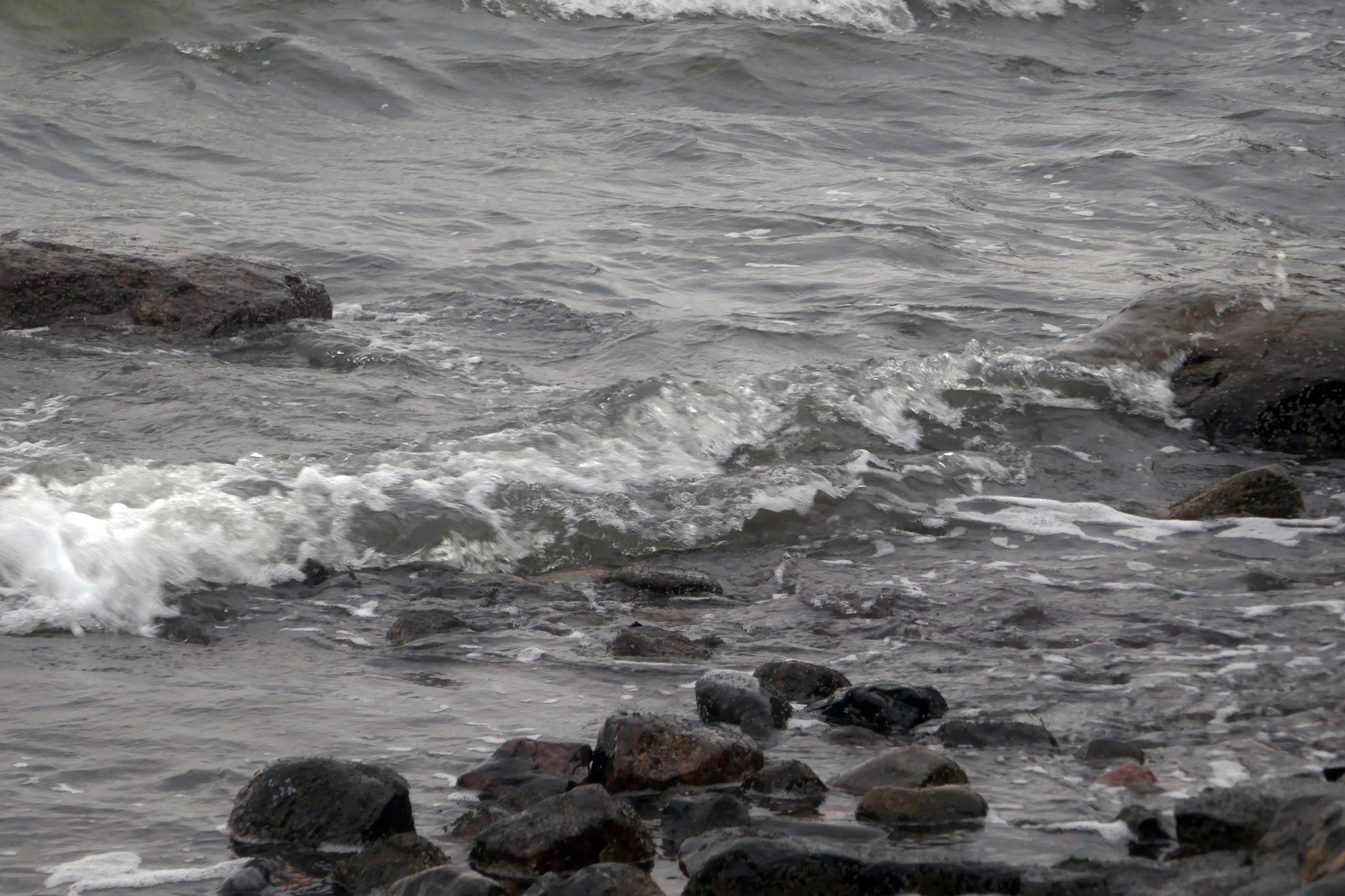
Our excursion started with some moments at the shoreline, watching the waves come in and enjoying the view of the open sea. Even for us northerners it soon got a bit chilly so the walk continued for 3 kilometers on a trail through the forest area of this national park.

When I was a child we could never have gone here as the Porkala – Porkkala region was ’rented out’ as a military base to the Soviet Union between 1944 and 1956. Originally the rental period was set for 50 years, The only Finns allowed in were passengers in the Helsinki – Turku-Åbo trains which transited through with a Soviet locomotive and the windows covered with wooden boards. The base was close, with the border only some 20 kilometers from the downtown city centre.

After our big neighbours did not succeed in occupying the country’s capital Helsinki through the wars of 1939-44 they forced Finland to cede a large area just outside the city. They even paid a symbolic rent for this land and sea base from where they felt able co control both the city and the waterways to St Petersburg.

In January 1956, just under three years after Stalin died, the Soviets gave up the base. It did of course reflect the fact that Finland was not considered an immediate threat anymore, but equally much that they could not afford to keep these expensive military bases outside the country. Also technology and weapons had developed so the Porkkala area lost much of its strategic importance.

Now peace and quet has settled also in this coastal region on the outskirts of Helsinki. Down at the sea there was a lonely person fishing from the cliffs and another walking in the distance along the shoreline. During our one hour noon-time forest walk we did not meet anyone else, once again realising how sparsely populated this country is even in the big southern population centres.

RISING FROM RUGGED CLIFFS SURROUDED BY OPEN WATERS, THE HISTORICAL FINNISH LIGHTHOUSE BENGTSKÄR

In December 1906 the Bengtskär lighthouse was taken in operation.

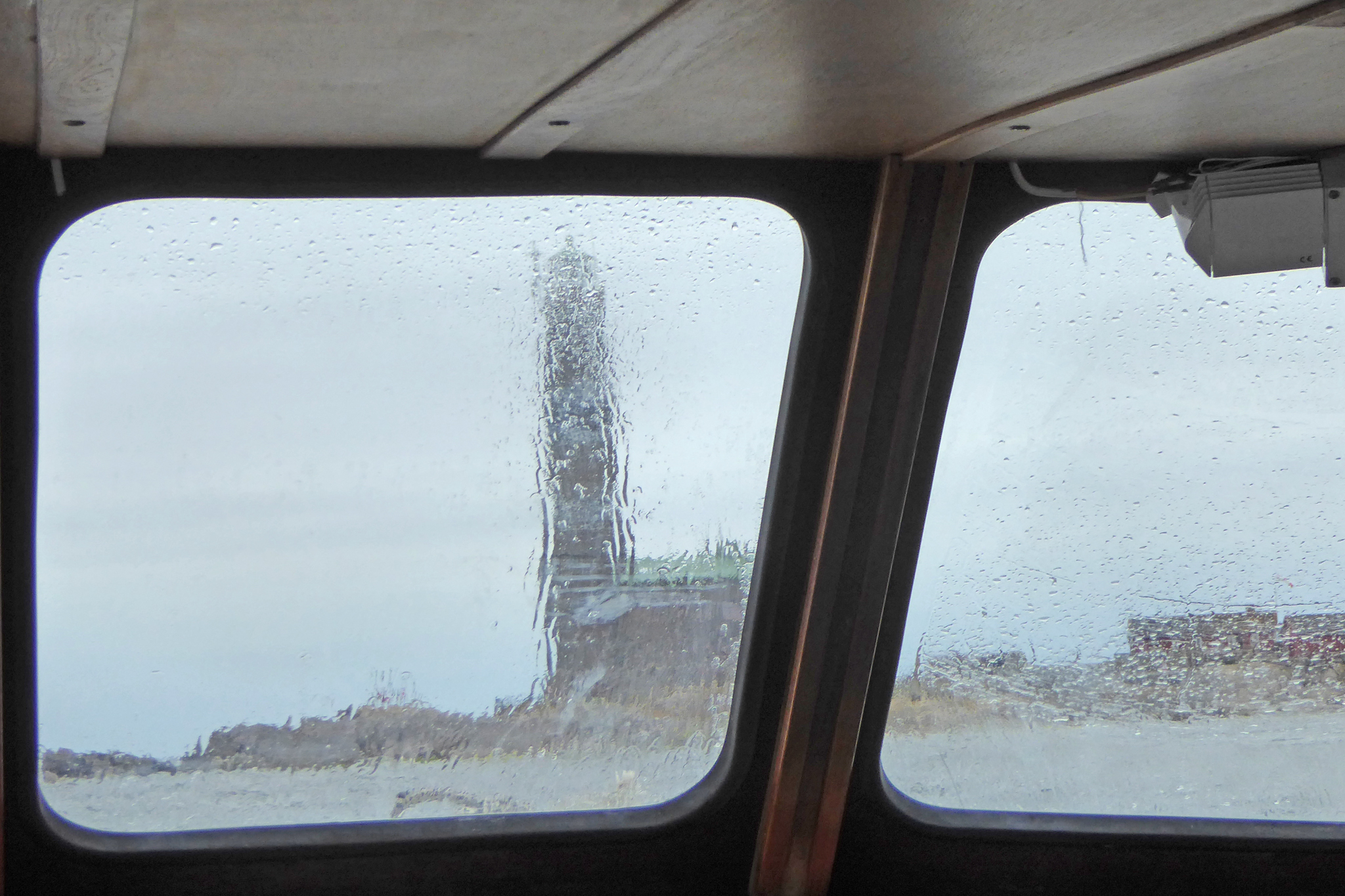
Finland’s long coastline has many treasures which invite to great outdoors experiences. One of them is Bengtskär, home of the tallest lighthouse in the Nordic waters. On a windy day in June 2019 we visited this historical site just over 100 kilometers west of Helsinki, the Finnish capital.

The lighthouse was built around the turn of the 19th and 20th centuries. The rugged cliff where the Bengtskär lighthouse stands is the southernmost of a myriad of small rocks and islands. Before its construction, this part of the northern shore of the Baltic Sea and Gulf of Finland was plagued by shipwrecks.

The scene of a particularly violent but failed attempt by Soviet troops to take over in 1941, Bengtskär is a natural, architectural and historical site at the same time.

In 1939 the Soviet Union attacked Finland which started the Winter War as we call it here. Against all odds this small country was able to fend off the take-over attempt but was forced to cede territory to the much bigger enemy. The coastal town of Hanko (Swedish: Hangö) had to be ‘rented out’ as a naval base which was set up in March 1940.

After a brief period of peace the war flared up again in the summer of 1941, also as Finland wanted to regain some of the earlier losses. The light tower at Bengtskär was used by the Finnish artillery for leading the fire of their nearby base as well as the navy and air force and thus the Soviet troops wanted to eliminate it.

A small museum in the lighthouse building ells the story of this violent battle in July 1941.

In the early dawn of 26 July, shielded by bad weather, four ships from the Hanko-Hangö base arrived at Bengtskär and landed some 120 elite soldiers. The small Finnish garrison was able to force the attackers to hide behind the large rocks on the island and they were for many hours unable to proceed to the lighthouse building itself.

Finally, the Finnish soldiers had to retreat to the higher levels of the tall building. Poorly armed, they stopped the first attempt by the attackers to force their way up the spiral staircase by throwing down the only hand grenade that they had. This caused a break in the fighting which allowed troops from the nearby Finnish coastal artillery station Örö to land on the other side of the small island. The Soviet troops finally had to retreat both from Bengtskär and from their naval base.

The battle over Bengtskär cost 32 Finnish soldiers their lives. The Soviet losses were probably much bigger although exact numbers have never been given out.

This grey and a bit rainy day was much more peaceful. Some 60 to 70 visitors had arrived there for a few hours, by taxi- or sight-seeing boats. We were guided around in three languages – Swedish, Finnish and English – and had a chance to stroll around on our own. The cliffs on this tree-less island were steep and slippery but the beautiful outer archipelago flora was more than worth a careful inspection walk.

Bengtskär is also a unique refuge for the eider birds and as you can see from the pictures there were still many female eiders ( Swedish: åda, Finnish: haahka ) in their nests quite close to the buildings. These birds are not shy of people and this does in fact protect them against the birds of prey at sites like Bengtskär. Some of us who have been around for quite a time know that the best pillows were always made with eider down – ejder dun in Swedish.

With the whole Baltic Sea opening up around Bengtskär it is far from easy to traffic this rocky little island when winds are strong and the waves are high. The ‘harbour’ or actually the berthing place is reached through narrow straits through the smooth but treacherous cliffs.

I was impressed by our boat driver and his skills, a young man from one of the islands in this archipelago. I also talked much with him about how life is here today. Many traditional small industrial sites have closed down and jobs are more scarce today than they used to be.

It takes an hour and a half by taxi boat to get to Bengtskär from the island village Rosala, a legendary holiday site in this Swedish-speaking archipelago.
At the natural harbour of Bengtskär.
The Moomin Troll mascot is watching over the taxi boat’s passage through cliffs and rocks in these stormy northern waters.

Still, I am happy we went there on Wednesday with its 7 m/s winds, on Thursday they were up to between 13 and 17 m/s.

The southern archipelago is a part of Finland where Swedish is the majority language, an important region for our national minority. This is also why Bengtskär does not have a Finnish name but is just called Bengtskär, in Swedish.

VILLAGE CEREMONY WHEN FINLAND HONOURED WAR HEROES

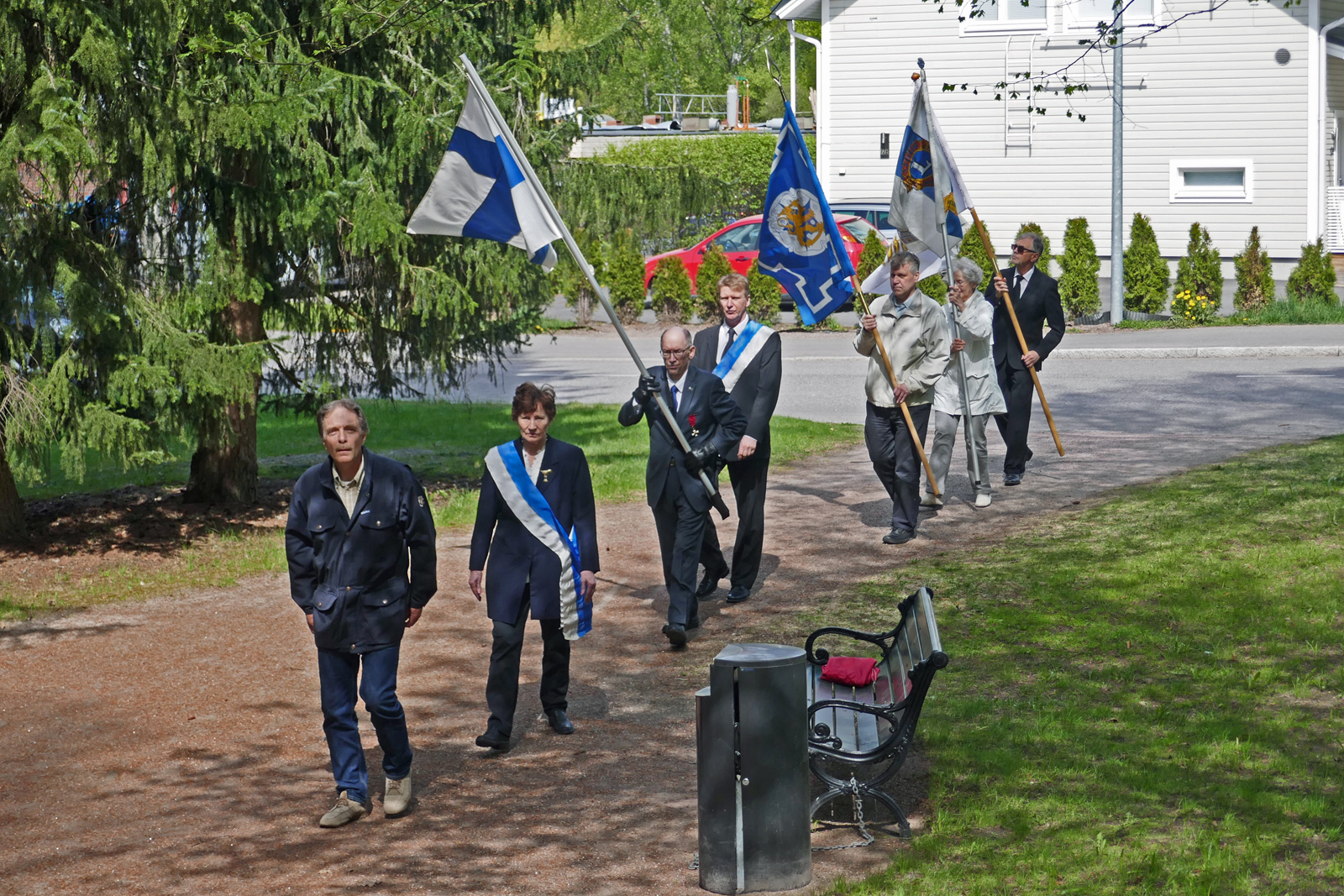
Today, on Sunday19th of May, Finland honoured its war heroes. After the Soviet Union attacked this country in 1939, almost all Finnish families lost loved ones, the whole population defending our existence as a western independent county. Here in my Helsinki city region – Pitäjänmäki or Sockenbacka in Swedish – we have a small graveyard and memorial for these war heroes and of course I was there at the ceremony, expressing our gratitude, as president of the local residents association.