
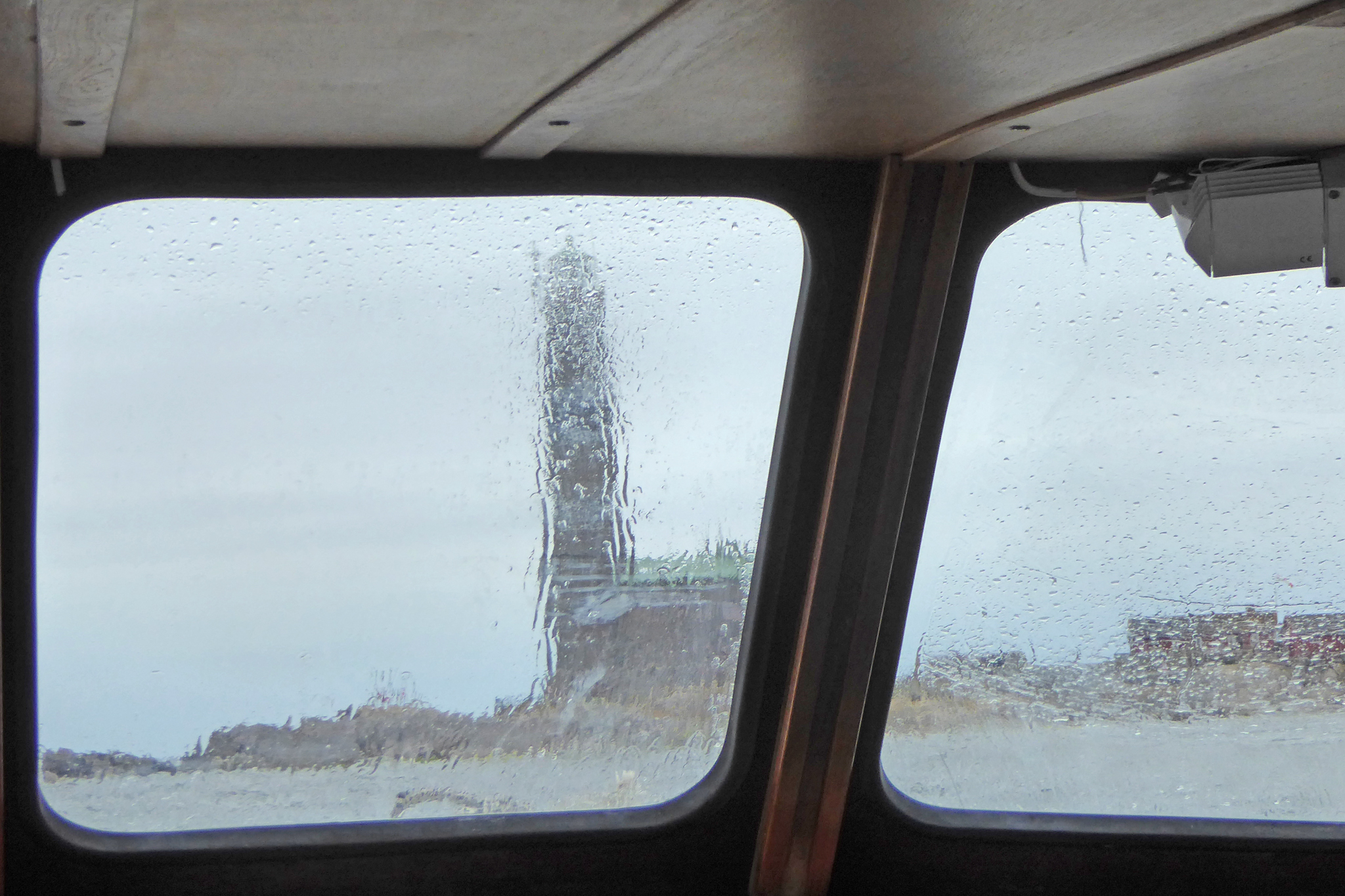


Finland’s long coastline has many treasures which invite to great outdoors experiences. One of them is Bengtskär, home of the tallest lighthouse in the Nordic waters. On a windy day in June 2019 we visited this historical site just over 100 kilometers west of Helsinki, the Finnish capital.
The lighthouse was built around the turn of the 19th and 20th centuries. The rugged cliff where the Bengtskär lighthouse stands is the southernmost of a myriad of small rocks and islands. Before its construction, this part of the northern shore of the Baltic Sea and Gulf of Finland was plagued by shipwrecks.


The scene of a particularly violent but failed attempt by Soviet troops to take over in 1941, Bengtskär is a natural, architectural and historical site at the same time.
In 1939 the Soviet Union attacked Finland which started the Winter War as we call it here. Against all odds this small country was able to fend off the take-over attempt but was forced to cede territory to the much bigger enemy. The coastal town of Hanko (Swedish: Hangö) had to be ‘rented out’ as a naval base which was set up in March 1940.
After a brief period of peace the war flared up again in the summer of 1941, also as Finland wanted to regain some of the earlier losses. The light tower at Bengtskär was used by the Finnish artillery for leading the fire of their nearby base as well as the navy and air force and thus the Soviet troops wanted to eliminate it.

In the early dawn of 26 July, shielded by bad weather, four ships from the Hanko-Hangö base arrived at Bengtskär and landed some 120 elite soldiers. The small Finnish garrison was able to force the attackers to hide behind the large rocks on the island and they were for many hours unable to proceed to the lighthouse building itself.
Finally, the Finnish soldiers had to retreat to the higher levels of the tall building. Poorly armed, they stopped the first attempt by the attackers to force their way up the spiral staircase by throwing down the only hand grenade that they had. This caused a break in the fighting which allowed troops from the nearby Finnish coastal artillery station Örö to land on the other side of the small island. The Soviet troops finally had to retreat both from Bengtskär and from their naval base.
The battle over Bengtskär cost 32 Finnish soldiers their lives. The Soviet losses were probably much bigger although exact numbers have never been given out.


This grey and a bit rainy day was much more peaceful. Some 60 to 70 visitors had arrived there for a few hours, by taxi- or sight-seeing boats. We were guided around in three languages – Swedish, Finnish and English – and had a chance to stroll around on our own. The cliffs on this tree-less island were steep and slippery but the beautiful outer archipelago flora was more than worth a careful inspection walk.

Bengtskär is also a unique refuge for the eider birds and as you can see from the pictures there were still many female eiders ( Swedish: åda, Finnish: haahka ) in their nests quite close to the buildings. These birds are not shy of people and this does in fact protect them against the birds of prey at sites like Bengtskär. Some of us who have been around for quite a time know that the best pillows were always made with eider down – ejder dun in Swedish.

With the whole Baltic Sea opening up around Bengtskär it is far from easy to traffic this rocky little island when winds are strong and the waves are high. The ‘harbour’ or actually the berthing place is reached through narrow straits through the smooth but treacherous cliffs.
I was impressed by our boat driver and his skills, a young man from one of the islands in this archipelago. I also talked much with him about how life is here today. Many traditional small industrial sites have closed down and jobs are more scarce today than they used to be.


Still, I am happy we went there on Wednesday with its 7 m/s winds, on Thursday they were up to between 13 and 17 m/s.
The southern archipelago is a part of Finland where Swedish is the majority language, an important region for our national minority. This is also why Bengtskär does not have a Finnish name but is just called Bengtskär, in Swedish.
