”VI DROG I ÅNGVISSLAN NÄR DET VAR TJOCKA OCH LYSSNADE OM NÅGON KOM EMOT” – SJÖKAPTEN SVEN-ERIK NYLUND HOS SOCIALDEMOKRATISKT FORUM

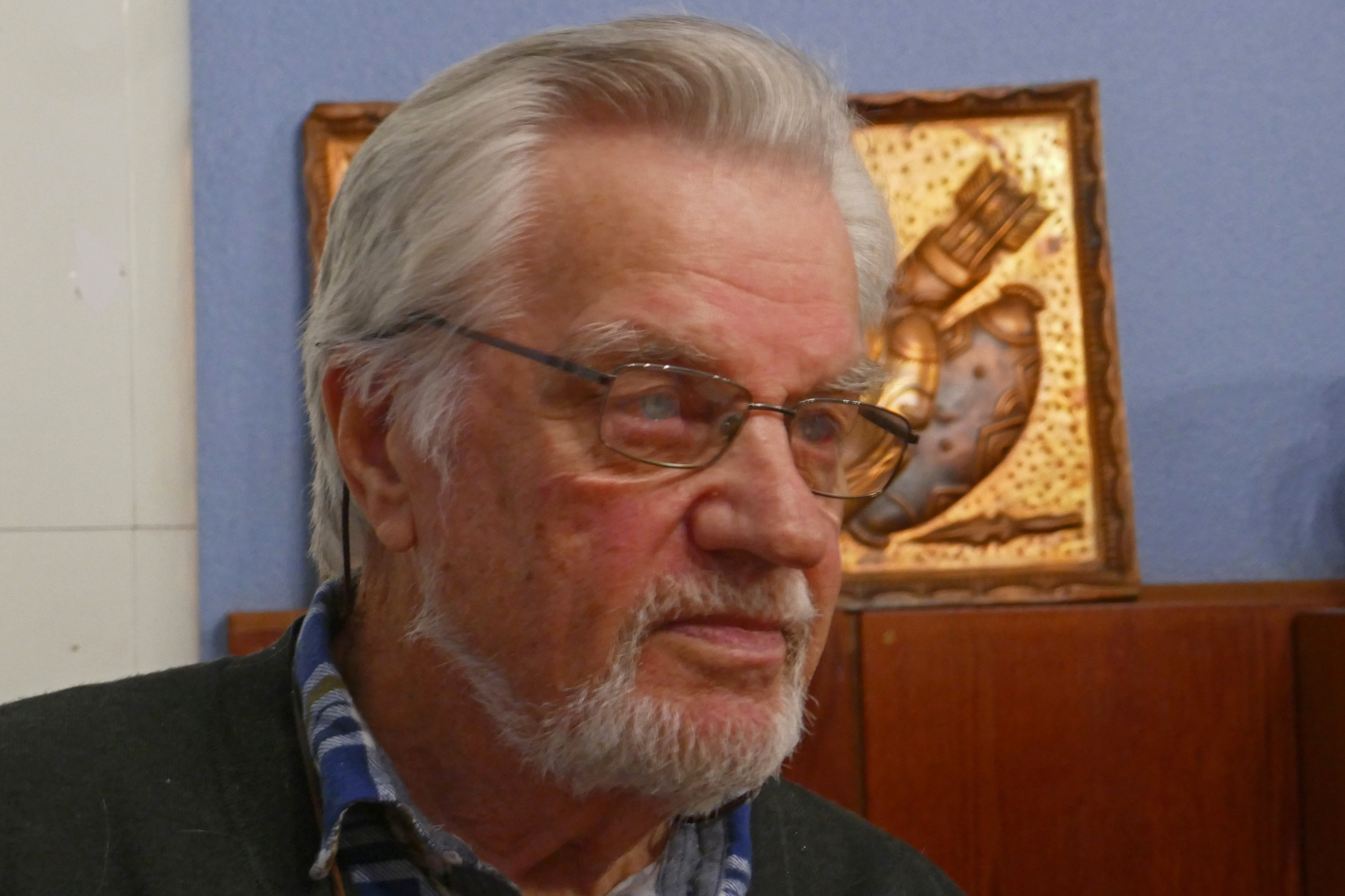
Sven-Erik Nylund

“Vi drog i ångvisslan när det var tjocka och lyssnade om någon kom emot.”

Sjökaptenen, fackföreningsledaren och den finlandssvenska socialdemokraten Sven-Erik Nylund gästade Socialdemokratiskt Forum på onsdagskvällen 9 oktober i Helsingfors. Vi som satt kring bordet på kvarterskrogen Zinnkeller i Kronohagen fick höra ett både intressant och levande föredrag när Sven-Erik kåserade om sitt liv.

Från den nyfödda babyns sparkstöttingsfärd över Helsingforsisarna på vintern 1937, från Boijes sjukhus till hemmet på Vrakholmens lotsstation, fram till talrika internationella sessioner i London och Geneve har Sven-Eriks liv rört sig kring havet och sjöfarten.

Redan som två-åring berättade han att han vill bli sjökapten och som 20-åring stod han som utbildad styrman på fartygsbryggan. Det var då som ångvisslan riktigt gällde, någon radar fanns det inte på alla båtar vid den tiden.

Mellan de här åren hann Sven-Erik vara krigsbarn i Sverige, mässpojke och sjöman, elev på navigationsinstitutet i Åbo och framförallt medlem i en familj och släkt av lotsar och sjöfarare. Ekenäs kom att spela en viktig roll i familjens liv, som hemort men också som scen för mycket dramatik under de svåra krigsåren.

Framförallt den färgrika farfadern hamnade flera gånger illa ut med lokala skyddskårister. Han var nog inte politisk men stor i käften förklarar Sven-Erik: – De förstod nog inte alls när farfar blev arg på att de skulle hugga ner fina träd från hans tomt för att sätta upp ett artillerifäste för Hangöfronten.

Också Sven-Eriks far hade det svårt med de lokala skyddskåristerna. ”Han förvisades från Ekenäs till skärgården vid Nystad där han ställdes under länsmannens uppsikt”, fick vi veta. ”Efter Stalingrad fick han flytta tillbaka till Ekenäs.”

Både den egna familjen och andra människor och händelser fick Sven-Erik Nylund att sedan engagera sig i den socialdemokratiska rörelsen.

Sven-Eriks farbror Uno var den första lotsen som vägrade lotsa in en bekvämlighetsflaggad båt till Helsingfors. Det grekiska fartyget som seglade under Liberias flagg körde sedan på grund när det tog sig ut från den finländska hamnen, berättade Sven-Erik, inte utan ett småleende. Farbror Uno hamnade nog först illa ut men med stöd från Wälläri och sjömansfacket blev det inga allvarligare följder.

Sjömansunionen och dess legendariska ordförande Niilo Wälläri kom att ha ett betydande inflytande också på Sven-Eriks fackliga verksamhet:

– Wälläri var nog klok när han satsade mycket på att förbättra sjöfararnas arbets- och livsförhållanden på båtarna och deras sociala och andra villkor, sade han.

Wälläri kunde också vara kvick, som när han försvarade de så-kallade procentarnas inkomster i en avtalsförhandling. Passagerartrafiken hade blivit livlig och den personal, kvinnor framförallt, som hade hand om dryckesförsäljningen ombord såg sina serveringsinkomster stiga med den ökande försäljningen. När arbetsgivarna ville sänka serveringsprocenten satte sig Wälläri emot: ”Eftersom spritförsäljarna inte kommer till himlen är det på sin plats att lönerna är litet högre” lär han ha sagt. Och så blev det.

År 1969 blev Sven-Erik Nylund anställd på Finlands Skeppsbefälsförbund. År 1973 gick förbundet in i FFC efter en medlemsomröstning.

På förbundet ägnade han sig mycket åt den viktiga internationella dimensionen, både inom IMO – Internationella sjöfartsorganisationen – och ILO – Internationella Arbetsorganisationen. Båda har en unikt viktig uppgift att skapa internationella regler, i praktiken lagstiftning, för den här globala verksamheten. Sven-Erik räknar med att han under sin arbetskarriär har bott ett och ett halvt år på hotell i London och otaliga veckor också i Geneve.

Kampen mot bekvämlighetsflaggning spelade en stor roll under alla de här åren. Här blev det finländska facket känt överallt i världen som en effektiv bevakare av sjöfolkets intressen. Wälläri spelade en stor roll här, säger Sven-Erik, och också ITF-inspektören Lauri Heinonen gjorde ett viktigt värv, ofta under svåra och farliga förhållanden.

Nu är Sven-Erik Nylund engagerad inom Vanda svenska socialdemokrater. ”Nämnderna i Vanda har alltid lagts ner när jag har varit medlem” berättar han leende, men frågar sedan om inte det här bidrar till att minska intresset för politik bland unga människor.

Så det var en jättefin SF-kväll kring bordet på kvarterskrogen Zinnkeller, litet av en sjömanskrog för en dag, tillsammans med sjöfararen och fackföreningsledaren Sven-Erik Nylund.

Ending employer repression of Bangladesh garment workers is a common task for buyers and unions

When large parts of the world were celebrating their year-end holidays, the Bangladesh garment manufacturers went on offensive against their workers. Over 1,600 lost their jobs and production at numerous facilities was halted as a repressive lock-out measure while several union leaders and worker activists were detained by police or driven into hiding. This ended strike action for a substantial rise to the country’s sub-standard 68 US Dollar monthly minimum wage.

At European sustainability conferences the Bangladesh Garment Manufacturers and Exporters Association BGMEA has liked to present itself as a modern employers’ association, respecting workers’ rights, including freedom of association. The picture has now been shattered by mass dismissals and police repression taking the place of constructive negotiations and social dialogue.

This has not necessarily been a surprise. We should not cheat ourselves by believing that fundamental changes in working life attitudes could appear over night in problematic producer countries. Respect for human rights at work grows slowly, at its best. For many years to come we will need outside involvement and pressure to develop and secure decent labour conditions. Trade regulations and socially responsible buyer policies remain the main tools for this.

Building and fire safety programmes are not enough

The building and fire safety programmes that were imposed on the industry after the Rana Plaza disaster have already improved numerous factory workplaces. This is an important achievement by both the European-dominated Accord and the US-based Alliance. Regrettably, a common project could not be reached.

Although workers’ and trade union rights are part of their agendas – particularly so within the Accord – their core tasks do not cover overall labour conditions. This is the role of other projects such as the Bangladesh Sustainability Compact  which brings together the European Union, the United States ( we will see then what happens with Donald Trump in the lead in Washington DC ) , Canada, the ILO and Bangladesh itself. It is complemented by the Decent Work in Bangladesh and the Better Work Bangladesh programmes, as well as by many other initiatives and activities.

Between 2013 and 2015, the Bangladesh Government put in place improved legislation on guarantee freedom of association, supported by the International Labour Organisation ILO. There are also national tripartite consultation mechanisms. Still, it would be be unrealistic to think that labour problems are solved when laws and regulations are updated and improved. There must also be a capacity and political will to apply the new principles. While resources could be built up reasonably fast, changes to social cultures and attitudes take much longer.

Buyers share the responsibility to act

International buyer brands and retailers sourcing or producing in Bangladesh cannot just close their eyes for what is happening now. The wage raise numbers can and should of course be discussed locally, but it is clear that the official minimum wage is seriously below what is acceptable for living costs. While it may not be the role of buyer corporations to involve themselves directly in wage negotiations, they do have a responsibility to intervene if freedom of association and the effective right to collective bargaining are violated. Labour conflicts should be settled in negotiations, not by police intervention and repression.

All serious social sustainability codes and standards require suppliers to pay wages that cover basic living costs and provide for some discretionary expenses. Some call it a living wage, some don’t, but it is always there. This is the time, if ever, for buyers to activate this and to get involved in  suitable ways.

Instead of deducting from the importance of sustainability, the rise of populism in buyer countries may add to it. There is a strong and forceful counter-reaction bringing people together in  new ways. Leading brands and buyers should not lose sight of the consumer powers of these people whose consciousness is growing as they engage in a fight for human and democratic values. Supply chain condition will continue to be in the public eye however government policies may change. Businesses need to overcome the all too common emotional and ideological aversions against working with trade unions on supply chain issues and accept that social  dialogue and cooperation builds a positive and even necessary engagement and stability.

Improved supply chain cooperation needed between business and trade unions

Also many global unions and non-governmental organisations could do some rethinking. Instead of attacking the sustainability schemes and initiatives they should be engaged to help bring about real and positive change. Without initiatives such as BSCI, SAI and its SA8000 Standard, WRAP, Fairtrade and others, control and remediation activities on the ground would be really thin. The social auditing industry which recently launched and important development effort through APSCA – the Association of Professional Social Compliance Auditors – will continue to play an essential role in making sustainable development possible.

On their own, unions and NGOs will not be able to generate real improvements, in an increasing unsympathetic world where hard business values and right-wing  populism continue to gain ground also among decision-makers. This is the time for pragmatic and mutually rewarding supply chain alliances, however conflicting the interests may be on other arenas.

Big stride forward for social compliance auditing as APSCA was established today in New York

APSCA – the Association of Professional Social Compliance Auditors – was established in New York today. The real professionals in this key sustainability industry took the responsibility for credibility and quality development in their own hands. The seriousness and transparency of the new organisation is shown by the important role given to partner, customer and civil society stakeholders.

Without social compliance auditors we would never see decent labour conditions in global supply chains. These are the people who inspect workplaces in supplier countries. They make it possible for factories and farms to show that they respect workers’ rights. This opens global markets for them and protects them against less serious competition. Even more important is that social auditing makes it possible to detect human rights and other abuses and helps set forth corrective action.

Buyer brands and retailers need professional compliance auditing for the due diligence obligations that the UN Guiding Principles for Business and Human Rights set on them. There are no other realistic alternatives as long as most major producing regions and countries are unable or unwilling to take the responsibility for this in a credible way.

Also the organisations that today question social auditing and auditors are unable to suggest viable and realistic alternatives. Their goal to rely on international legal controls and developed labour relations systems in global supply chains turns against its own purpose if global buyers are denied their most important tool for applying due diligence. This makes no sense, and would bereave workers the support that they can have through codes and standards that buyers expect the local employers to respect.

Social compliance auditing is far from perfect, and yes much must be improved here. Also code and standard organisations have to be constantly critical about their own role and efficiency. Buyer brands and retailers need to adapt their own approach to the more stringent due diligence obligations that the UN Guiding Principles, the OECD and ILO guidelines, and their national action plans give them.

There is no conflict between mainstream labour relations based on legislation and collective agreements and voluntary initiatives by business to help them comply with their due diligence obligations. On the contrary, they do need each other.

I would hope that we could see a fast improvement in this respect where other conflicts of interest or ideological differences would not be allowed to play out at the expense of supply chain workers. On all sides we would need some more soul-searching and compromise-seeking.

Creating the Association of Professional Social Compliance Auditors APSCA could not be more timely. Today in New York, a critical mass of leading auditing firms got the new organisation on its way. Including global buyer companies, sustainability organisations and other stakeholders was a wise and important decision. This shows that the auditing industry wants to listen to its partners and the public, and proceed very seriously with tackling any problem issues and ensuring a reliable, efficient and cost effective sustainability service also in the future.

When I accepted the invitation to join the APSCA Stakeholder Board I was already encouraged by the industry deciding to take action. In fact I was demanding this myself when I spoke at a Global Social Compliance Programme GSCP Conference in San Francisco some years ago. Having participated in the founding meeeting in New York yesterday and today, my expectations are even bigger.

Most of all I was impressed by the commitment and engagement by all participants to make sure that their auditing activities help make a real positive difference for workers in the global supply chains. Especially the many compliance auditors who were present showed a real passion for their work.

This has not come about by itself. APSCA executive director Rona Starr has really got the wheels moving, making sure that the engagement and good intentions turn into concrete action.

APSCA will now go on to ensure that social compliance auditing is trustworthy and that auditors and their employer companies respect high ethical and professional standards and are fully skilled to take on their demanding tasks.

So, good vibrations here at the APSCA meeting in New York.

Serious about supply chain sustainability? Business, unions and advocacy organisations need to work together

To promote better labour conditions in global supply chains we need effective and sincere public-private cooperation in consumer countries. We need socially responsible buyer companies willing to invest in supply chain conditions. We need trade unions and civil society organisations that have set their priorities right and put supply chain workers’ interests first.

Why do we have so much suspicion and conflict between those who should be driving positive supply chain change together, as main private sector partners?

Relations have deteriorated

Global supply chain relations have indeed deteriorated during a number of years. Where joint sustainability approaches used to play the major tole we now see new alliances between global unions and labour advocacy organisations. Businesses tend to go more on their own than before, and there is a much weaker trade union participation in voluntary schemes and initiatives.

Labour relations are now more adversarial and the political climate harder than before the economic crisis hit. Instead of sharing the added value created by growth, labour partners fight over who will pay the costs of shrinking economies. Workers are carrying an unreasonably heavy burden through unemployment and dwindling standards. Income differences are bigger than ever and political polarization continues to generate conflicts and instability.

The International Labour Conference in June sent conflicting signals on supply chains. Employer organisations started by doing their best to deny that there would be governance issues needing to be tackled. Global trade unions and their NGO allies again saw nothing good in voluntary initiatives, questioned the sincerity of buyers and did not hide their preference for legislation that would impose rules and sanctions on them. Much of this was normal ILO tactics, for sure, but there is also a troubling reality behind.

An adversarial start was finally turned into agreement to continue discussions, with much of the credit going to the International Labour Office and ILO Director-General Guy Ryder.

Why are unions and campaigners against voluntary initiatives?

I can well see many reasons why global unions question voluntary multi-stakeholder and business driven social sustainability initiatives. Some criticism is fair enough, other reflections are linked more to trade union needs and ambitions. It is good to remember that corporate social responsibility itself is something suspicious in broad union circles. Business is not at all too innocent in this respect, having too often used CSR as a vehicle to avoid trade union recognition and collective agreements.

Many unions and advocacy NGOs are unhappy with what they see as a slow pace or even absence of improvements in supply chain labour conditions. They genuinely believe that voluntary initiatives have failed to change overall supply chain realities. This is why they call for more legal regulations and accountability.

These views are good to take seriously.

Brands and retailers have often dragged their feet and failed to act on poor working conditions in their supply chains. They ignored their due diligence obligations which of course existed far before the UN Guiding Principles for Business and Human Rights made them formal. For sure, there were brands and retailers that understood this and really tried to do something concrete, but there were also very many who did not.

Unfair to accuse initiatives for poor supply chain labour conditions

I share much of this union and civil society disappointment over an all too slow slow pace of change. The enormity of the task is a contributing factor, but also a bad excuse for not investing more resources and effort. Still, full credit should be given to the many brands and retailers who are very actively working on these challenges.

It is both unfair and professional to criticize the sustainability schemes and initiatives for this, or social compliance auditors. Here we often find the actors who have the strongest and most concrete commitment to decent conditions in supplier industries and who are trying to do something real.

To promote and support organising and collective agreements in producer countries is a legitimate activity for any trade union. At the end, working conditions and labour relations must be managed locally, respecting universal global norms. This requires a social dialogue between mutually respectful partners who negotiate collective agreements. They should preferably be concluded on an industry level, applied and enforced with effective government support. The IndustriAll-driven ACT project together with a number of buying brands in Cambodia is an interesting pilot for such approaches.

Many unions and advocacy organisations make a mistake when they try to throw out voluntary multi-stakeholder or business driven schemes and initiatives. There is no way that unions and social advocacy organisations could fill the gap if brands and retailers were to abandon their own programmes and activities. It is more than unlikely that most retailers and brands, and governments, would agree to substitute this work with legislation and sanctions. I also fail to see the logic in unionists and labour advocates demanding brands and retailers to respect their due diligence obligations if they are at the same time doing their best to discredit serious efforts. Ending the voluntary involvement of buying companies could spell disaster for workers in many supplier industries and countries.

The multi-stakeholder Bangladesh Fire and Safety Accord has achieved many things and I do support it of course, but we should also remember that even together with the business-driven Alliance it covers only a part of labour conditions, albeit an important one. The whole field of human rights and sustainability at work is very much broader. The problems encountered when trying to secure freedom of association within these projects send a message that mainstreaming their principles would be an extremely complicated and long process, if not even politically impossible.

Both legislation and voluntary schemes are needed

We will continue to need all stakeholders on the stage, both public and private, employers and unions. Voluntary schemes and initiatives are an important tool for this. For sure there needs to be more legally binding norms as well. National governments and the international community need tools to set minimum acceptable standards and at the same time a level playing field which would also protect serious enterprises against social dumping and unfair competition. How this could be done without creating disadvantages in the countries where governments take their obligations seriously, and without scaring buyers away from the least developed producer countries, remain to be seen.

As a result of awareness building, where multi-stakeholder and business driven voluntary initiatives have played the central role, supply chain conditions cannot be ignored by business anymore. They are now part of core corporate issues and concerns. Buyer-driven capacity building and remediation activities abound and suppliers have to pay more attention to their labour conditions.

This does not mean that voluntary initiatives should not improve their performance – in fact they are constantly doing this. I take an example which I know very well, Social Accountability International SAI. With their Social Fingerprint and Ten Squared programmes and an impressive work to improve SA8000 social audit reliability, the new young SAI leadership does indeed merit a very strong support from business, unions and other stakeholders. This is a good example of linking social auditing and workplace certification to capacity building and remediation.

The SA8000 Social Standard is still the strongest instrument to define and promote human rights at work and decent working conditions. In today’s social climate it would not be possible to reach a common understanding between the labour partners on levels as high as those in SA8000. Being one of the authors of the standard-setting GSCP Reference Code I can also vouch for the SA8000 having been one of the main resources in that work. SAI – as well at the Social Accountability Accreditation Services SAAS – has been an important source of knowledge and experience while we were working on the whole GSCP toolbox, with its guidelines and advisories for all parts of sustainability activities.

Campaigning against social auditing hurts workers and is not professional

Social audits play an important role when buying brands and retailers exercise their supply chain due diligence. Being visible and commercially managed parts of voluntary initiatives both auditors and auditing firms have been a frequent target for campaigns and criticism. Individual shortcomings and mismanagement cases have been generalized to question the credibility of the whole activity and industry. This is both unfair and incorrect towards the numerous serious and highly skilled enterprises and individual auditors who are producing important services for supply chain businesses and their workers. Without them, due diligence would be impossible. It is not professional to allow criticism against globalization and mistrust against large private enterprises influence the attitudes to social auditing.

Most social auditing takes place outside the public eye and there are indeed many reasons for this. Confidentiality rules are equally important to protect workers as their supplier employers. Without these rules it would often be impossible to get a correct picture of conditions.

Demands for more transparency in  global supply chains and buyers’ supplier relations will surely bring some changes to sustainability audits. This has to be done without violating the necessary confidentiality. The auditing industry itself can benefit from this. The new Association of Professional Social Compliance Auditors APSCA where I am now a member of the Stakeholder Board will have to address this issue.

We need respect and new cooperation between supply chain players

We should move to new convergence within global supply chain sustainability work and engage both public and private partners in joint efforts. We do need to accept and support a broad specter of action and initiatives, the task is far too big to successfully approach otherwise. This we owe to the workers and their families as well as to the businesses and entrepreneurs in producer countries. Relations at home in advanced consumer countries cannot be allowed to undermine effective joint efforts but must be kept separate. The Global Social Compliance Programme GSCP has proved that this can be done and a similar message comes from Germany’s Textile Alliance.

Genuine engagement and responsibility, mutual respect by and for all participants, and honest intentions to build pragmatic and effective partnership are some of the elements that are now needed.

The Consumer Goods Forum took over GSCP – focus on combating forced labour

The Consumer Goods Forum moved in a timely way when integrating the Global Social Compliance Programme into its structures and work. The GSCP sustainability toolbox had been completed and the convergence-driving equivalence process was well established. Emphasis needed to be shifted to new things.

Taking up the challenge of forced labour in global supply chains was both bold and ambitious and sends a signal about how serious the approach is. When the joint CGF effort takes off it can again prove that voluntary private sector initiatives can effectively defend and support human rights and promote decent work in the globalised economy. As a member of the Advisory Board, I am pleased that GSCP was given the task of initiating and helping to launch this work. It does show the success of our common initiative.

When I was invited to bring the trade unions into this newly formed sustainability platform my first reaction was rather reserved. There was this group of leading multinational retailers and they had already developed a code and set a work programme. Would we really be able to influence, or be there just to give credibility to big business?

My discussions with the founding companies, particularly Carrefour at that time, convinced me that changes and adjustments would be made so that we could come on board. 

This was not a self-evident decision for UNI Commerce. Some of the GSCP companies were engaged in serious labour conflicts with our affiliates – how could we work side by side with them without weakening the union positions? What about the right to form trade unions and conclude collective agreements?

My view was – and still is – that industrial country employers and trade unions cannot act out on their disagreements or labour conflicts at the expense of workers and their families in supplier regions. This would be both immoral and unethical. We have a shared responsibility for supporting human rights and decent working conditions in countries that cannot or will not do it on their own.

Maybe my own Nordic background where seeking social dialogue and partnership plays a central role for my conviction that we should join. Thus I was pleased and even impressed that the UNI Commerce unions agreed and decided to set out on the joint voyage.

Our work on the Reference Code as well as the other parts of the unique GSCP sustainability toolbox was always marked by a genuine will from all participants to find the best and most effective approaches to defining what good looks like and how it can best be promoted in the global supply chains.

Today’s labour relations climate is harder than when we built up GSCP together. Instead of sharing the results of growth employers and unions deal with paying the costs of shrinking economies. This has also affected sustainability work.

Global unions have downgraded or even ended their participation in many schemes and initiatives. They are openly questioning social audits and voluntary programmes, calling for more legislation instead. For this, they have formed new alliances with militant social advocacy organisations. We have indeed witnessed something of a collapse of broad multi-stakeholder cooperation on social sustainability in global supply chains.

At the ILO International Labour Conference in June this year we could see the divides. Unions and their NGO allies were pushing for a new binding Labour Convention while employers denied that there were governance problems or any need for new regulations. The end result was largely non-committal as could be expected and discussions about a possible new Convention continue. 

Many unions and advocacy organisations hope that the UN Guiding Principles for Business and Human Rights would be applied through binding legislation in the home countries of buyer companies. I have seen this clearly also through my participation in Germany’s Textile Alliance.

With governments unwilling to put their own business sectors at disadvantage, this will not happen. Also from a development point of view increased risks for sanctions – also for unintended issues – could lead brands and retailers to leave some of the least developed countries where the need for a foreign economic involvement may be biggest. I am convinced that respecting the UN and OECD due diligence obligations will continue to rely largely on voluntary corporate responsibility schemes and initiatives.

I do understand the NGO and union frustrations over what they feel is an all too slow pace of positive changes through audit based initiatives. Still I think that much of the criticism is unfair, maybe also driven by their own organisational interests. The projects that they have developed themselves are highly supportable and can be useful as best practice examples, but too narrow both to substance and coverage to make a real difference for the total supply chain picture.

Both buyer companies and sustainability schemes have done much to support human rights and decent working conditions in global supply chains. GSCP has played a major role in moving emphasis from audit reports to improving labour conditions. Both capacity building and remediation has grown, most of it enabled by the buyer community.

Social auditing continues to be an essential part of this work. GSCP has done much to support the auditing industry in its efforts to secure audit quality and reliability and this work now continues in the new Association of Professional Social Compliance Auditors. I have joined the APSCA Stakeholder Board together with representatives of some of the CGF member companies, a further sign of these links.

Approaching the forced labour issues through joint activities does not mean that the CGF, GSCP or member companies would abandon the rest of their agenda. Driving convergence of social sustainability work at a high and demanding level remains essential if we want real and positive changes to take place in the supply chains.

Very much is already being done, but regrettably much of it outside the public eye. While brands and retailers are very skilled in marketing their products they are much less active in telling about their own sustainability work. Here, both the CGF and GSCP should pay much attention to transparency and reporting. The work to eradicate forced labour will give a good opportunity to do this and thus also draw attention to the need for broad public-private cooperation to defend human rights at work.

Level playing field through supply chain labour convention supported by voluntary schemes and initiatives

The ILO in Geneva

I have been following – at distance – the ongoing ILO Labour Conference #ILC2016 in Geneva. Much of the discussions center around the often unacceptably poor working conditions in global supply chains, as well as the all too common human rights violations.

The International Labour Organisation ILO brings together governments, employers and trade unions from around the world. This tripartite UN organisation develops and agrees global labour norms which are then set as a basis for national legislation and collective agreements.

Fundamental rights are regulated by core Conventions which have to be applied by all member countries whether they have ratified them or not.

The global supply chains which provide us a with a major part of what we consume have brought new dimensions to setting labour standards. Here, not only the direct employers in producing countries determine working conditions, but very much also the powerful buying brands and retailers. Their influence on supplier conditions is substantial as prices and purchasing conditions can set severe limitations on what the producer in a developing or newly industrialised country is able to offer. This does not mean that these supplier companies would be benign employers, often quite to the contrary, but it does limit the possibilities to press nationally for improvements.

Many brands and retailers have realised that they need to share in the responsibility for employment and working conditions in their supply chains. This has been accepted also by the international community, for instance in the UN Guiding Principles for Business and Human Rights and the OECD Guidelines for Multinational Companies.

The workers’ group at the Labour Conference say that they wish to see a new International Labour Convention to protect the supply chain workers who are often vulnerable and work under difficult and even unsafe conditions for wages far below what is needed for a decent life.

Not surprisingly at all, the employers’ group lead by the International Organisation of Employers IOE say no to any regulations. They insist that new rules are not needed and that dealing with problems is more of a practical task.

Often these employer politicians are slower and more reluctant to accept the need for change than real life employers and business leaders. When we look at positions taken by many top global brands and retailers we can see that they are far ahead of the Geneva outfit. Of course, the negotiating setup at the ILO plays its own role for positioning.

Like in other parts of life and society, constructive and responsible behaviour in global supply chains requires both binding legislation and conviction and voluntary action by business itself.

Some of the more advanced companies could well on their own enable decent conditions in their supply chains. Many are making sincere efforts to do this. Still, binding rules are needed to establish a level playing field that guarantees the basic worker rights at the same time as it protects brands, retailers and suppliers from unfair competition. A new convention would also make it more difficult to push less developed supplier countries to compete with each other through a downward spiral.

Of course, drafting a new supply chain convention would be a highly complicated task. Any new responsibilities will need to be analysed very carefully in order to avoid unwanted effects, including on investment decisions.

Confidence levels are also at a low between many stakeholder groups and business which complicates the situation now when advocacy organisations play a more visible role on the side of trade unions which have an established negotiating culture and direct responsibility to their constituents in companies and workplaces.

Also unions need to take a critical look at themselves, especially the global unions that have to play the role as a counterforce to the no-saying IOE employers. To combine a vocal criticism towards social responsibility schemes and initiatives with the drive for binding regulations, denying the value of these schemes and initiatives, is not the best of approaches.

There has to be room for both legislation through a new Convention and for voluntary schemes that allow going further and help applying the principles. In many countries concerned it will take a long time before local trade unions emerge and genuine tripartite labour relations can take on the responsibility.

To build up an artificial conflict between binding legislation and voluntary initiatives will only weaken the chances of arriving at an acceptable result.